EventCRM

Project Overview
EventCRM is an AI-powered tool built at 26ideas to help Indian catering and wedding businesses design menus and plan events with far less manual effort and risk.
At 26ideas, the goal was to bring structure and automation to one of the most operationally chaotic parts of the events industry, starting with menu creation and ingredient planning for large multi-day weddings.
The opportunity: a modern tool for a traditional industry
My founder had previously run an event company in the early 2010s and had firsthand experience of how outdated operations were in the catering and wedding space.
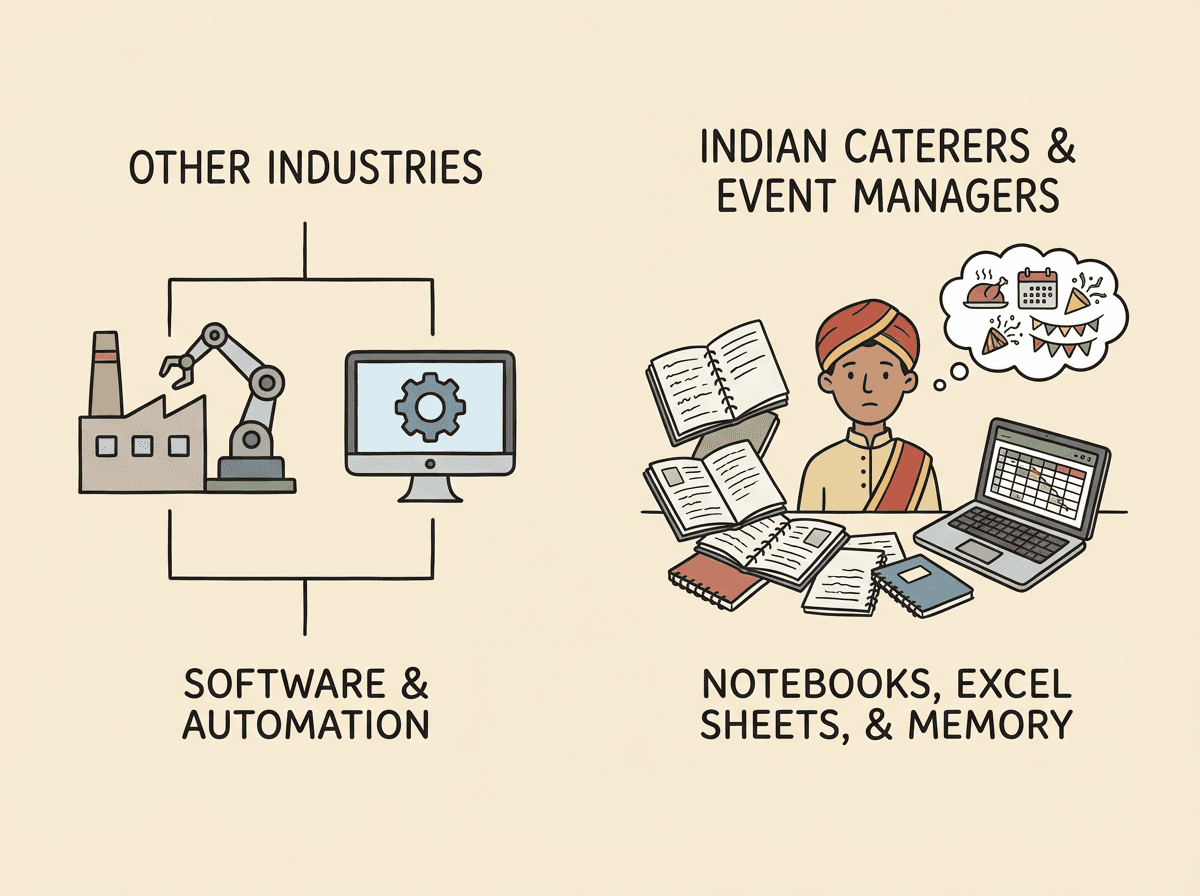
Even as other industries adopted software and automation, most caterers in India still relied on a patchwork of notebooks, Excel sheets, and memory to plan complex multi-day events.
Understanding how Indian menus really get made
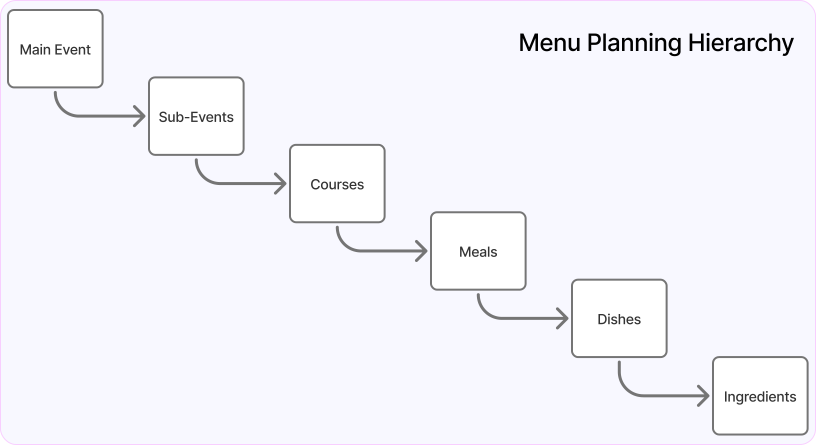
My approach began with deeply mapping how premium caterers like Trupti Caterers actually design menus with their clients. A single event could span multiple days, each day including several meals, and each meal broken down into multiple courses and dozens of dishes with countless variations.
Through conversations and observation, it became clear that creating the “first draft” of a multi-day menu could take up to three days of back-and-forth.In that time, clients often continued talking to competing caterers, and slow menu turnaround directly translated into lost business.
The hidden pain: ingredients, scaling, and complexity
I began by deeply mapping how premium caterers like Trupti Caterers actually design menus with their clients.
A single event could span multiple days, each day including several meals, and each meal broken down into multiple courses and dozens of dishes with countless variations.
Through conversations and observation, it became clear that creating the “first draft” of a multi-day menu could take up to three days of back-and-forth.In that time, clients often continued talking to competing caterers, and slow menu turnaround directly translated into lost business.
Defining the product: from vague pain to focused problems
From this research, I helped narrow EventCRM’s focus to two high-impact problems:
Generate a strong first-draft menu in seconds, not days
Instantly translate a confirmed menu into a structured ingredient list that could be customized per caterer
This scope gave the team a clear starting point while leaving room to expand into broader event planning workflows later.
The hidden pain: ingredients, scaling, and complexity
To make menu generation viable, we first needed a robust data foundation.
I created an exhaustive dataset of dishes and ingredients, where each item was tagged across dimensions like Jain/non-Jain, vegetarian/non-vegetarian, gluten-free, sugar-free, and more.
This tagging system allowed the product to respect strict cultural and dietary rules while still giving AI enough structure to compose menus automatically.The underlying spreadsheet became the backbone for how EventCRM reasoned about dishes, constraints, and substitutions.
Crafting the menu creation experience
To help caterers design menus that are both creative and operationally sound, I built an AI-driven flow that balances flexibility with real-world constraints:
Event-first constraints: The flow starts with event type, dates, guest count, and budget to ensure all menu recommendations are realistic and financially viable.
Dietary guardrails: Caterers set preferences like veg, non-veg, vegan, eggs-only, and alcohol, ensuring the AI never suggests off-brief items.
Cuisine mix control: Indian and international cuisines can be blended using percentage-based inputs, allowing precise regional balance.
Intelligent generation: The AI converts these constraints into proportionate, feasible menus, balancing creativity with operational practicality.
Automating ingredient planning after menu confirmation
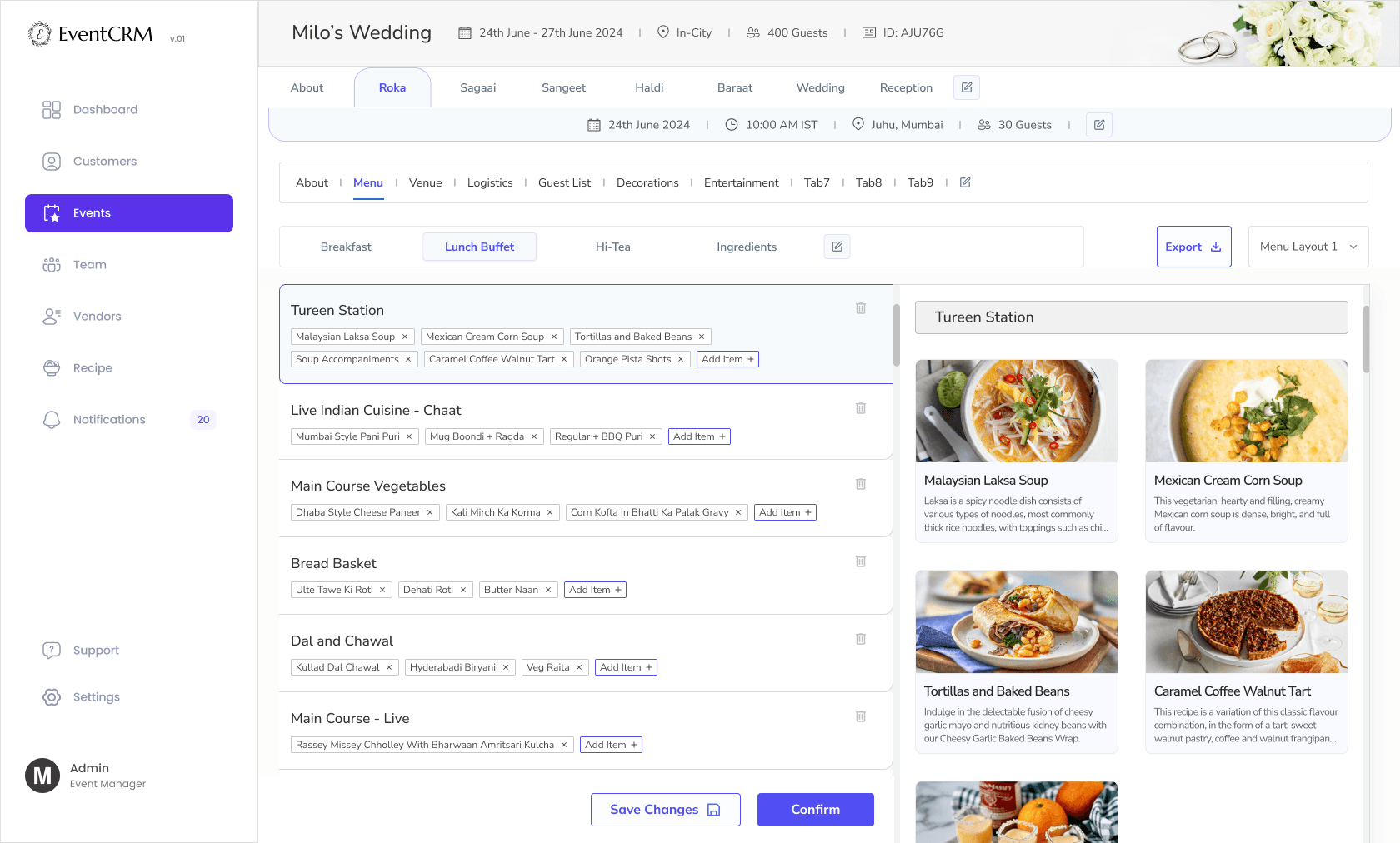
Once a menu was confirmed, EventCRM could instantly produce an ingredient list scoped to that event’s guest count and structure.
Each dish’s ingredients were mapped and scaled automatically, turning what used to be a multi-hour spreadsheet exercise into a generated view.
Because each caterer has their own way of cooking the “same” dish, I also designed tenant-level customization: caterers could adjust ingredients and have those preferences reflected in future calculations
This respected the craft and individuality of each kitchen while still providing automation.
Remembering clients and evolving menus
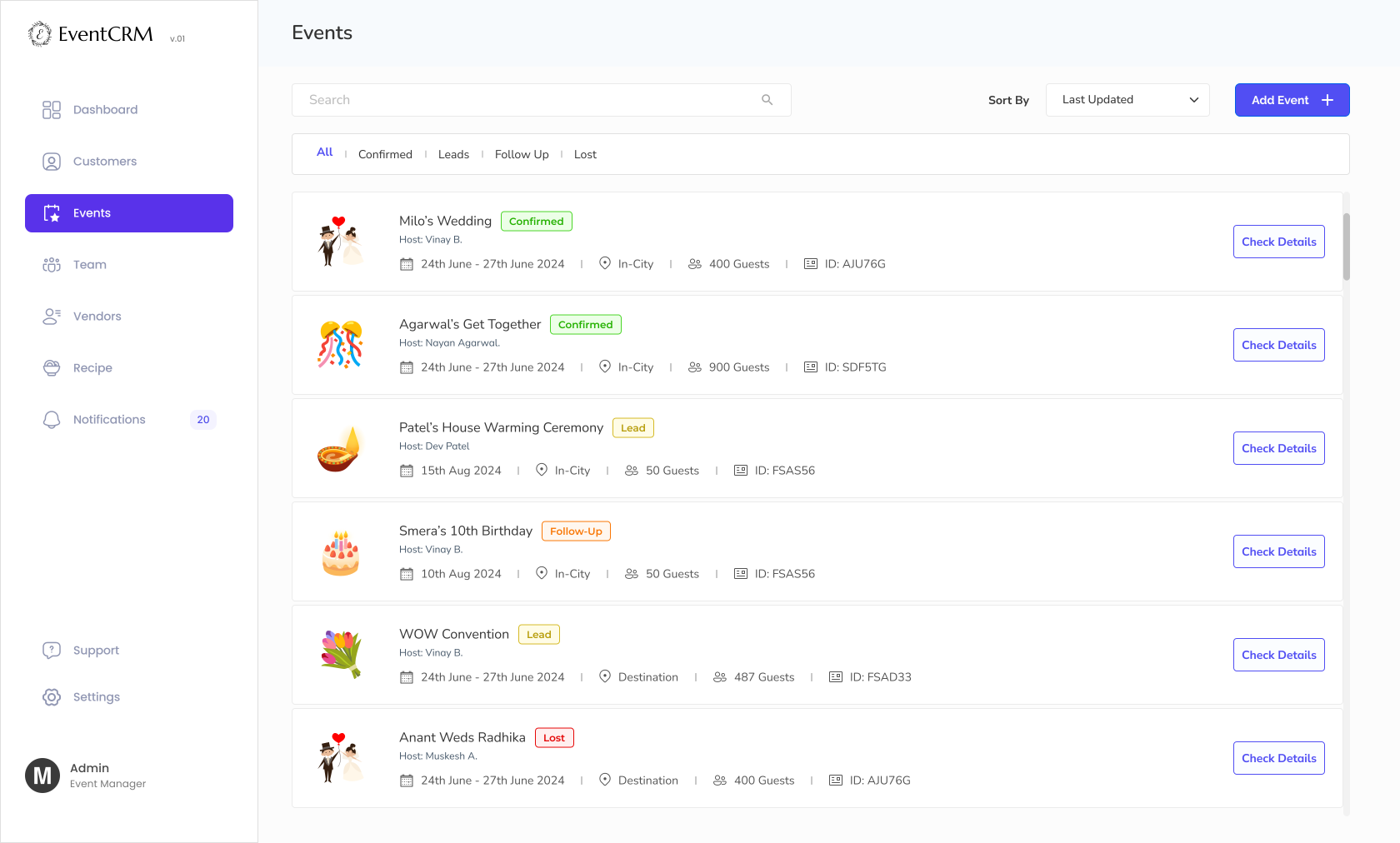
To solve caterers’ biggest recall problem, I designed a client profile system that automatically stores every event, menu, and configuration once a proposal is created
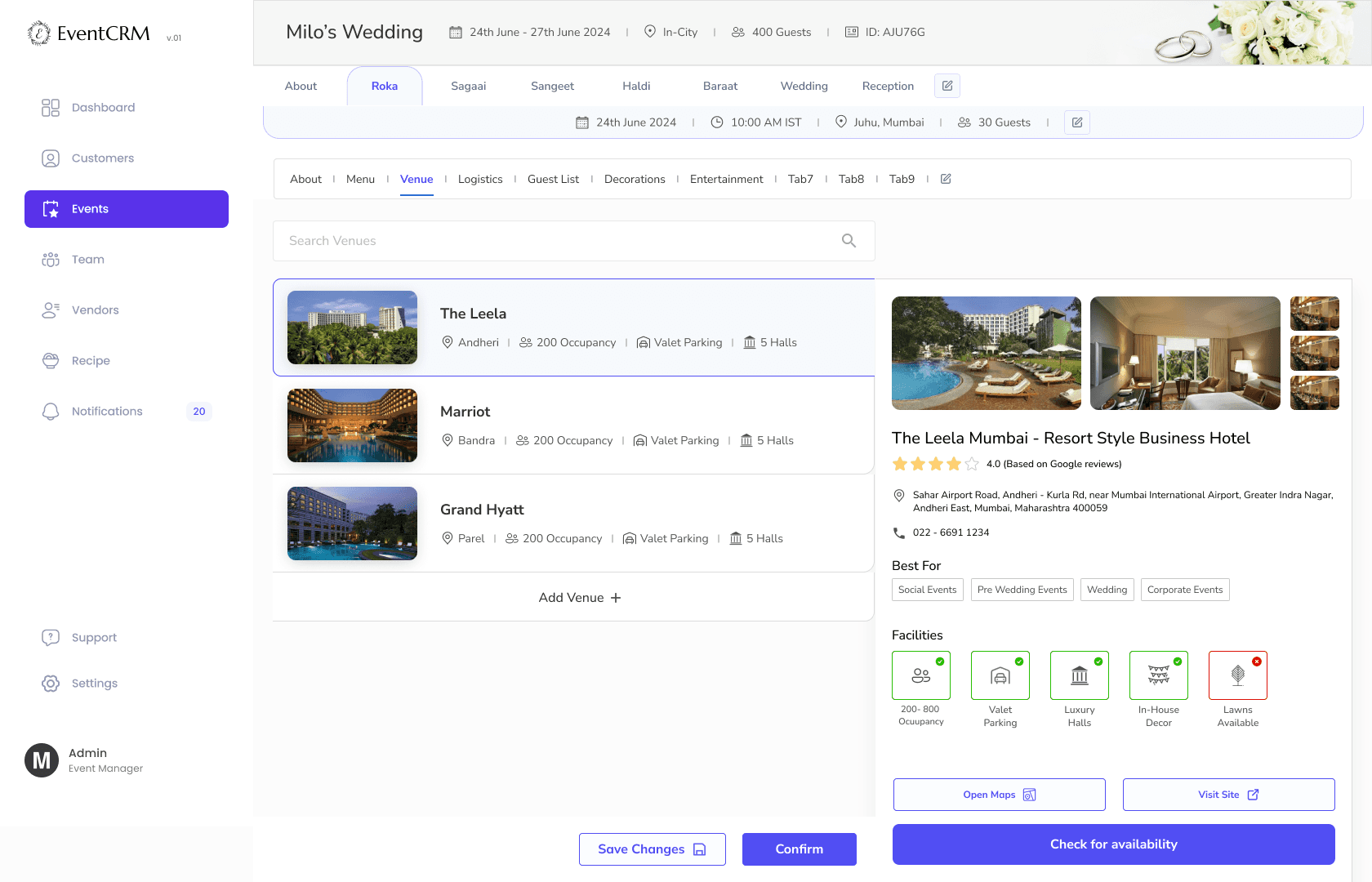
When a client returns, the caterer can instantly see past events and reuse or tweak previous menus instead of rebuilding everything from scratch.
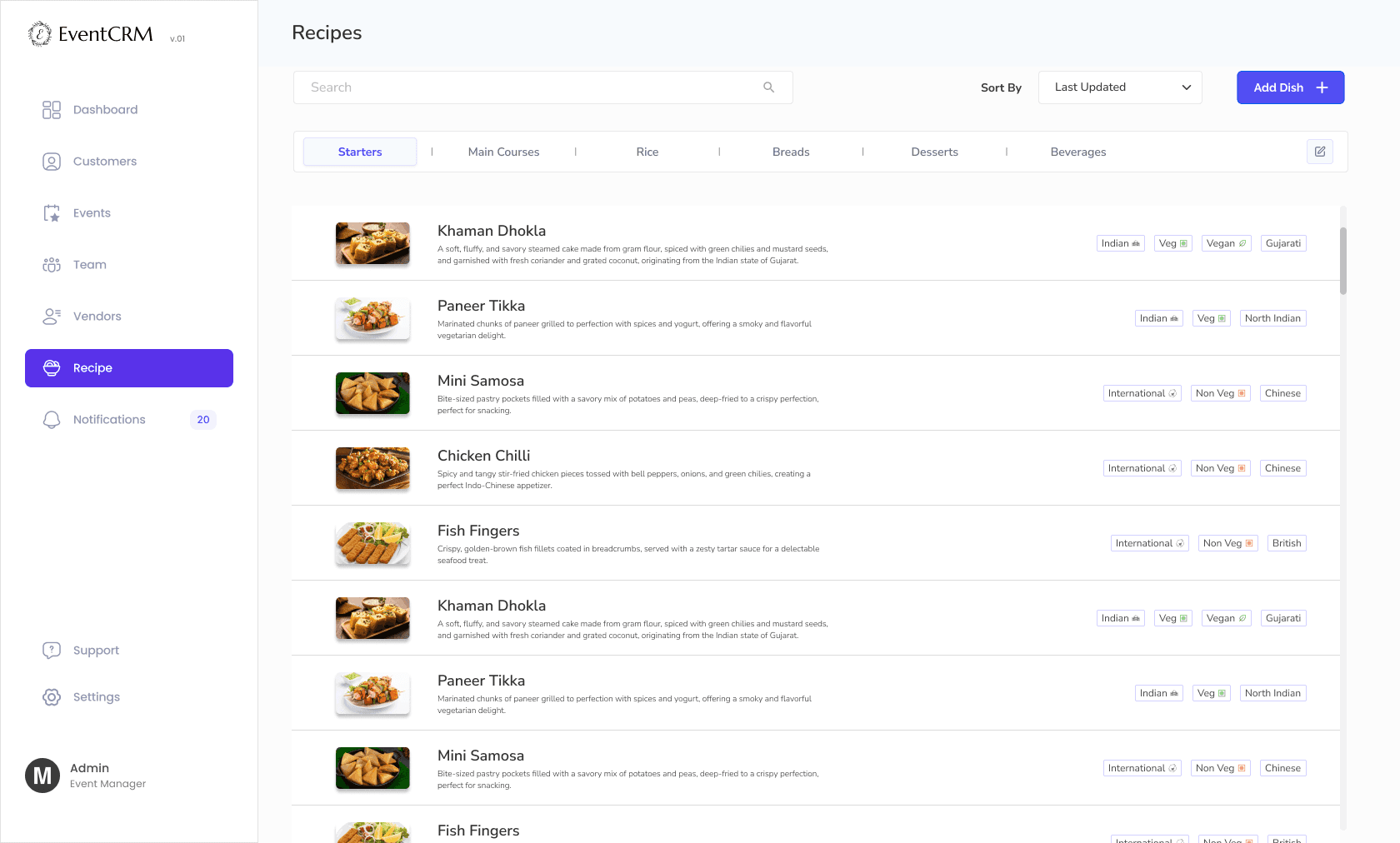
I also let caterers upload their own proprietary dishes into EventCRM, manage recipes and ingredients, link preferred vendors, and tag dishes with attributes like veg, non‑veg, sugar‑free, and more.
The deeper a caterer invests in their dish library and tagging, the smarter EventCRM becomes at proposing menus that reflect their style while still meeting client constraints.
Taking EventCRM to FAIC Hyderabad: learning from 200+ caterers all over India
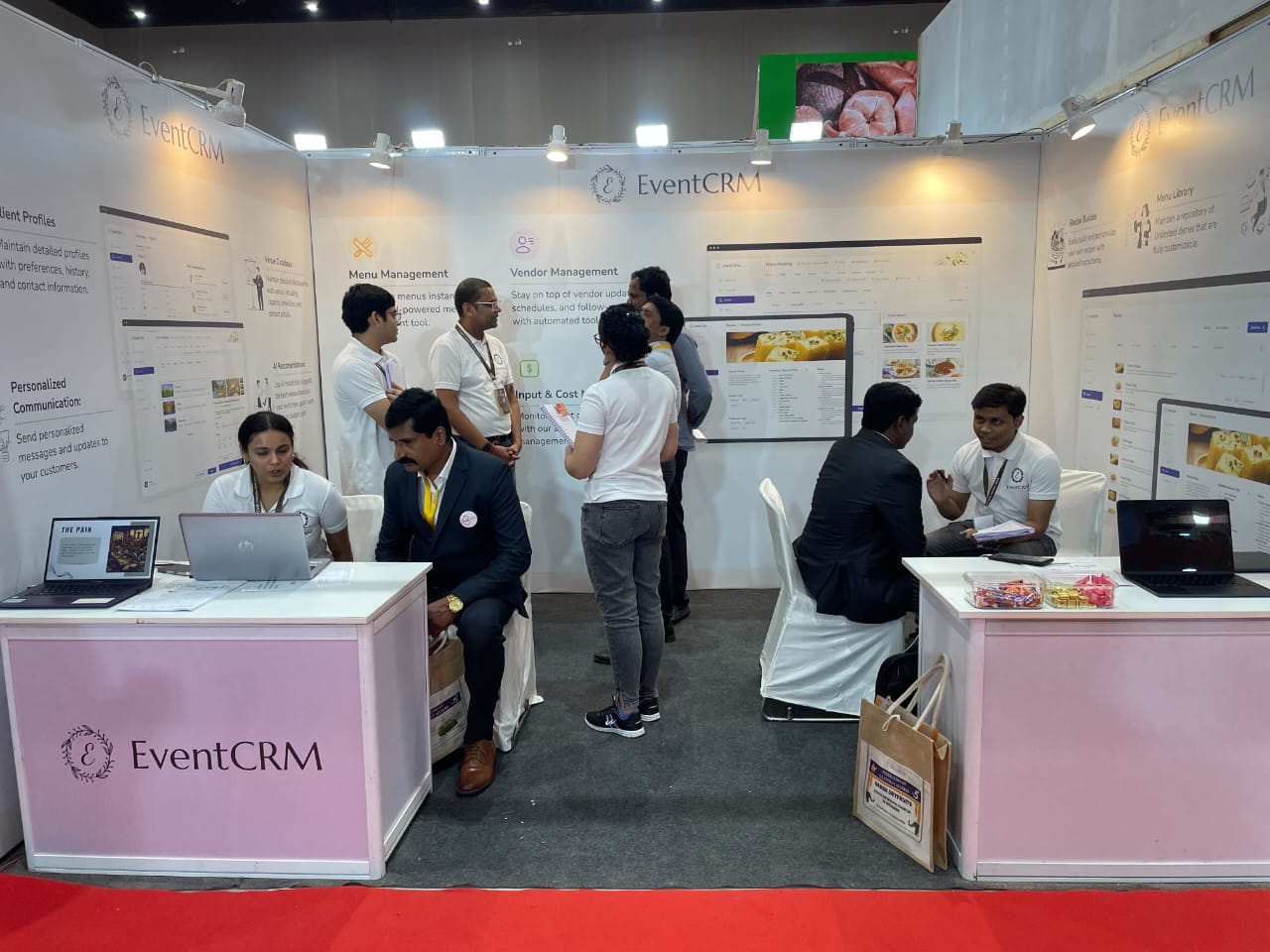
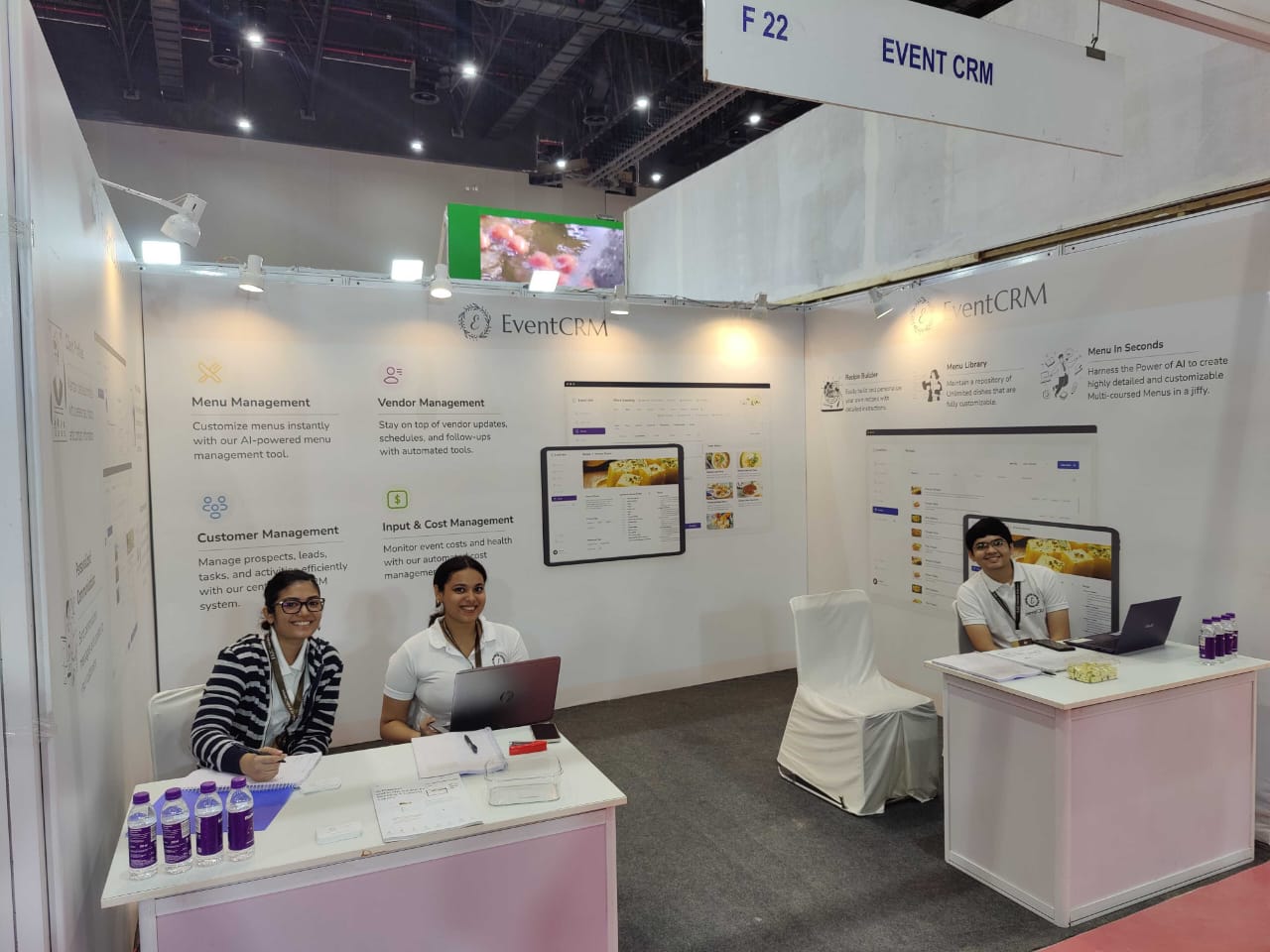
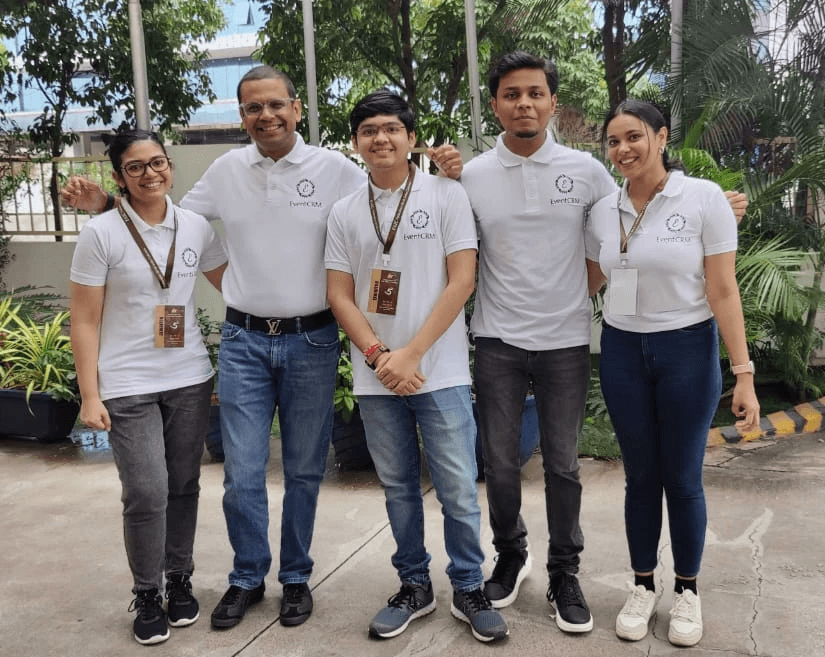
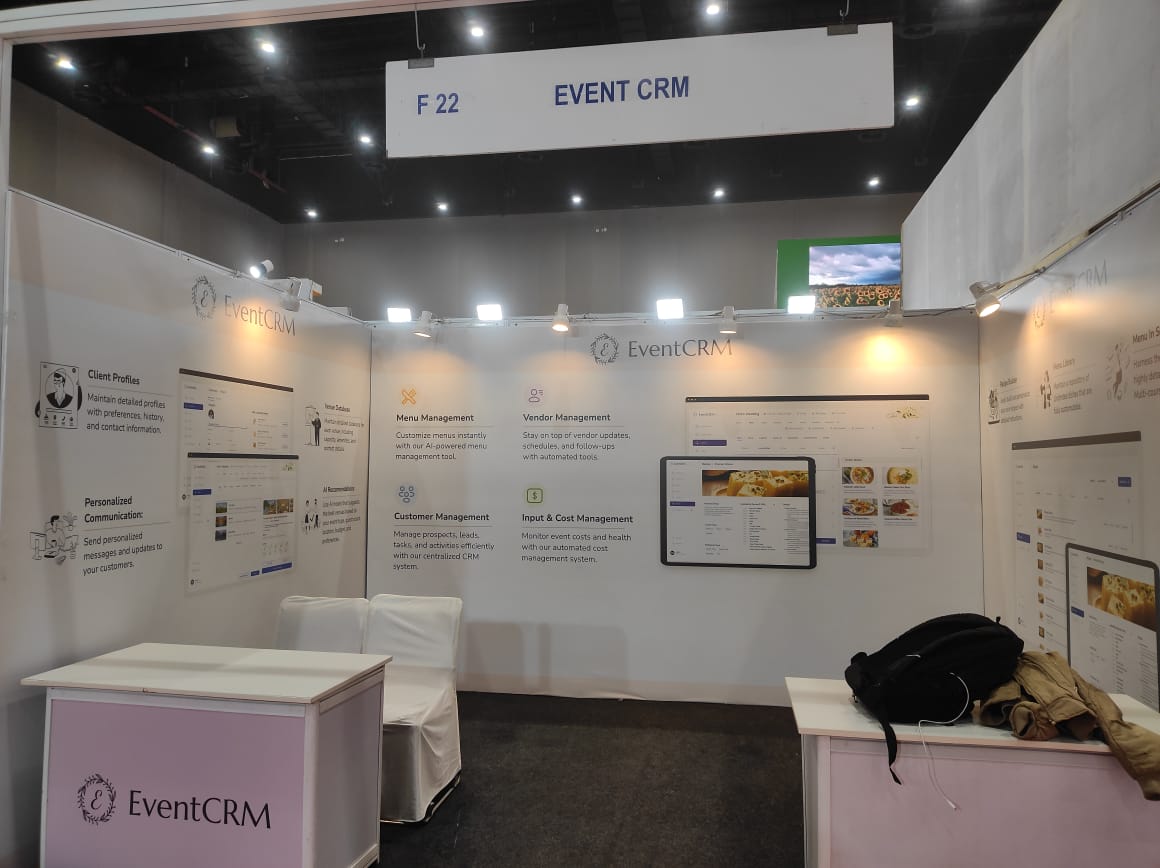
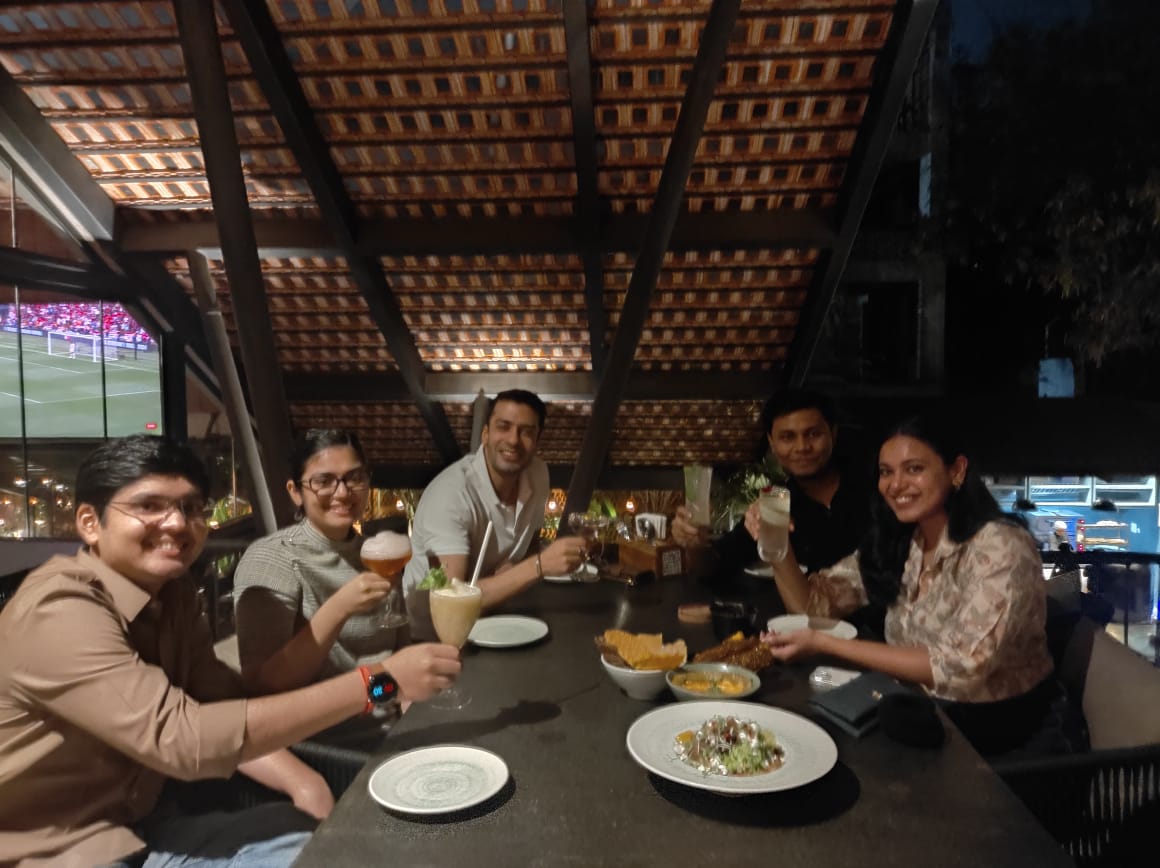
With an alpha version ready, the team took EventCRM to the Federation of All India Caterers (FAIC) expo in Hyderabad.
Over two days at our booth, Our team demoed the product and spoke one-on-one with more than 200 caterers from across the country.
For each conversation, I captured their context, workflows, and pain points on dedicated sheets and attached visiting cards for follow-up.These sessions revealed both validation for our core problems and a long tail of additional operational headaches—from staffing to billing—that informed our future roadmap thinking.
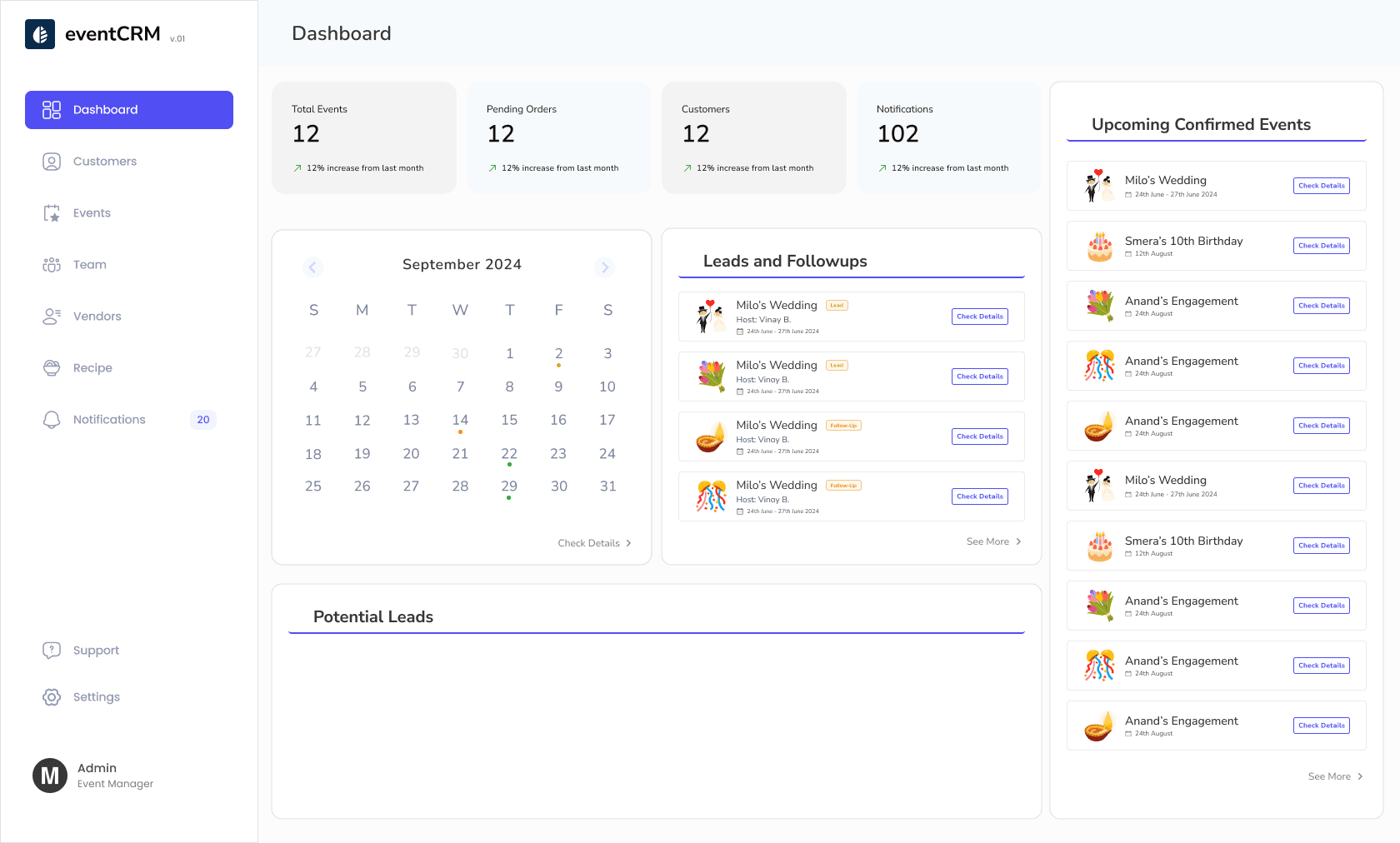
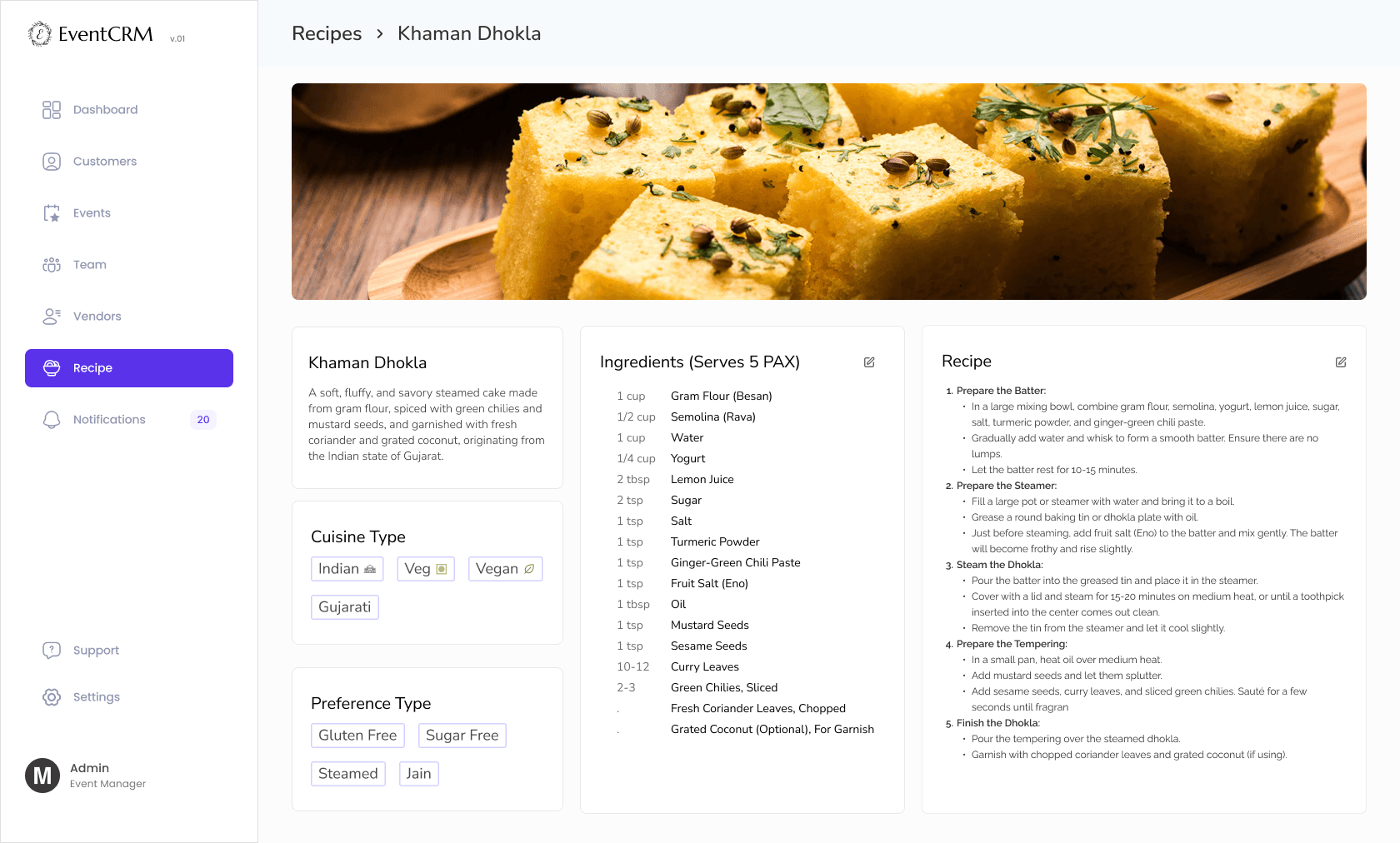
EventCRM – Screens from the Shipped Product
Swipe through the core screens where caterers actually design menus, recall past events, and bring complex weddings to life.
Where the product landed
By the time version one was ready, EventCRM could:
Generate a full, multi-day menu draft in seconds from a guided input flow
Produce a structured, scalable ingredient list immediately after menu confirmation
Support customization so each caterer’s unique recipes were reflected in the system
The core experience turned hours or days of manual work into a short, guided session supported by AI and a well-structured data model.
What this project taught me
Even though EventCRM did not scale as a business, it was one of the most formative product challenges I’ve worked on.
It taught me how to design for deeply operational, non-digital-native users and how to balance AI “magic” with the realities of trust, habits, and timing.
From a craft standpoint, it stretched my skills in data modelling, complex workflow design, and field research with a niche but demanding audience.From a product standpoint, it reinforced that shipping a strong v1 is only half the story; success also depends on timing, migration strategy, and the appetite for change in the market.