Project Overview
#JustWalkIndia is a social fitness initiative and mass-participation sports IP that celebrates walking as a universal, inclusive act, not just another race.
At 26ideas, I co-led product and UX for #JustWalkIndia, designing the digital experience for registrations, profiles, bib management, and post-event engagement for over 5,000 walkers in the Mumbai 2025 edition.
Why we built #JustWalkIndia
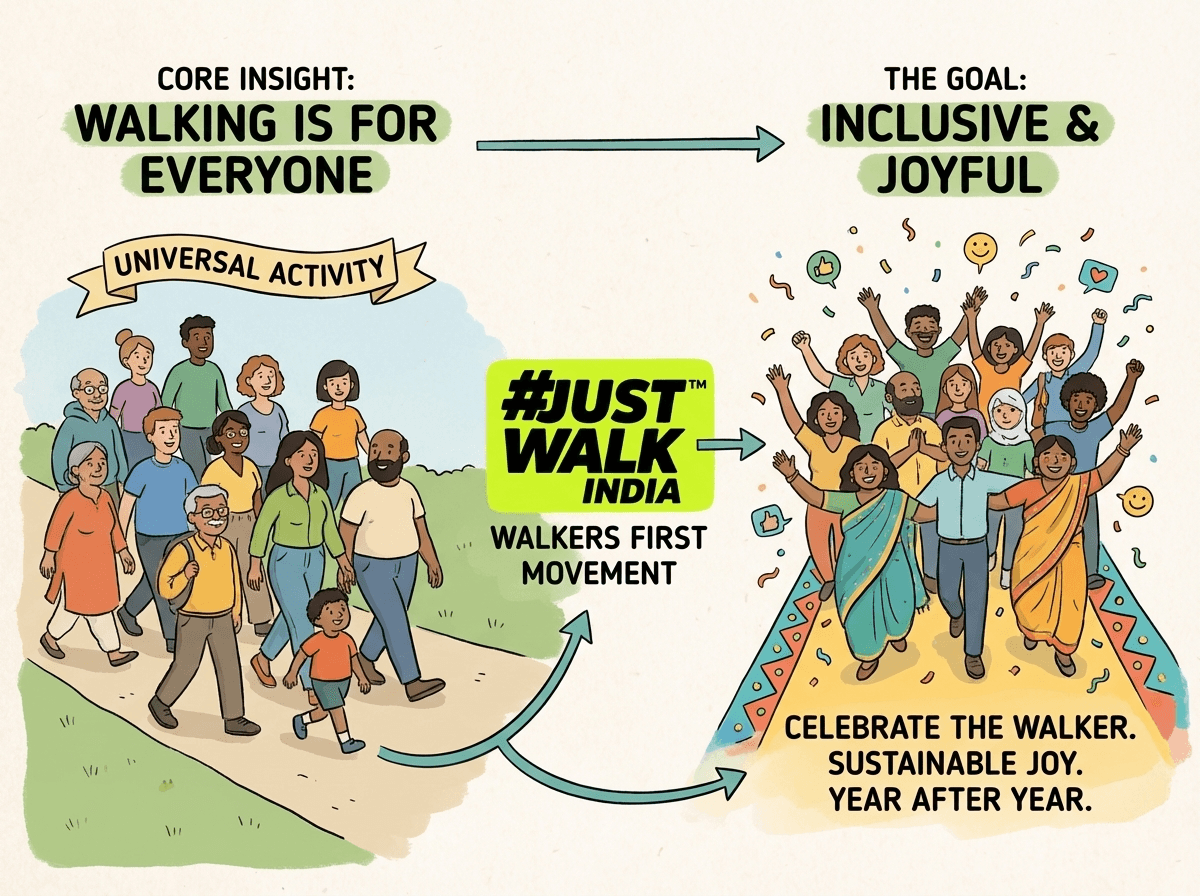
The core insight behind #JustWalkIndia was simple: walking is the one physical activity almost everyone does, across age, fitness level, and background — yet it rarely gets celebrated.
Most walkathons and marathons treated walking as just another event format, without truly honoring the walker or sustaining a relationship beyond race day.
We wanted to build a movement that put the walker first: celebrating their decision to show up, making participation easy, and creating an experience that felt inclusive, joyful, and repeatable year after year.
Spotting the gap: walkathons without memory
As part of discovery, our entire team registered for existing events like the Skechers Walkathon 2024 to understand the current experience end to end. What stood out was that each edition treated participants almost like new people — past timing data, photos, and history weren’t meaningfully tied to a persistent identity.
On top of that, key parts of the experience were fragmented across multiple third-party vendors: one handled timing, another handled photos, and communication often came from different systems.There was no single place a walker could log in, see their history across years, and feel like their journey was recognized.
Designing a walker-first identity system
To fix this, we decided that every participant should have a persistent, digital identity inside #JustWalkIndia.
At registration, each walker (and each family member registered by them) received a unique account and profile, rather than being treated as a single contact record under the primary payer.
This profile became the anchor for:
Personal details and health-related info
Event registrations across years
Timing data and performance history
Photos and memories from each edition
Instead of being “just another bib number,” walkers now had a home for their story with #JustWalkIndia.
Unifying a fragmented vendor ecosystem
Behind the scenes, we still worked with specialized vendors for timing and photography, but the experience was redesigned so that walkers never had to think about that.
I led the integration of timing and media partners via APIs, mapping external data back into our internal user and event models.
After the event, walkers could log into their profile on #JustWalkIndia and see:
Their timing data, broken down by distance checkpoints
Event-specific photos, surfaced by face recognition based on a selfie they uploadedAll of this lived in a single, coherent interface rather than scattered across multiple vendor portals.
Custom Digital Certificates issues to them as a token of appreciation.
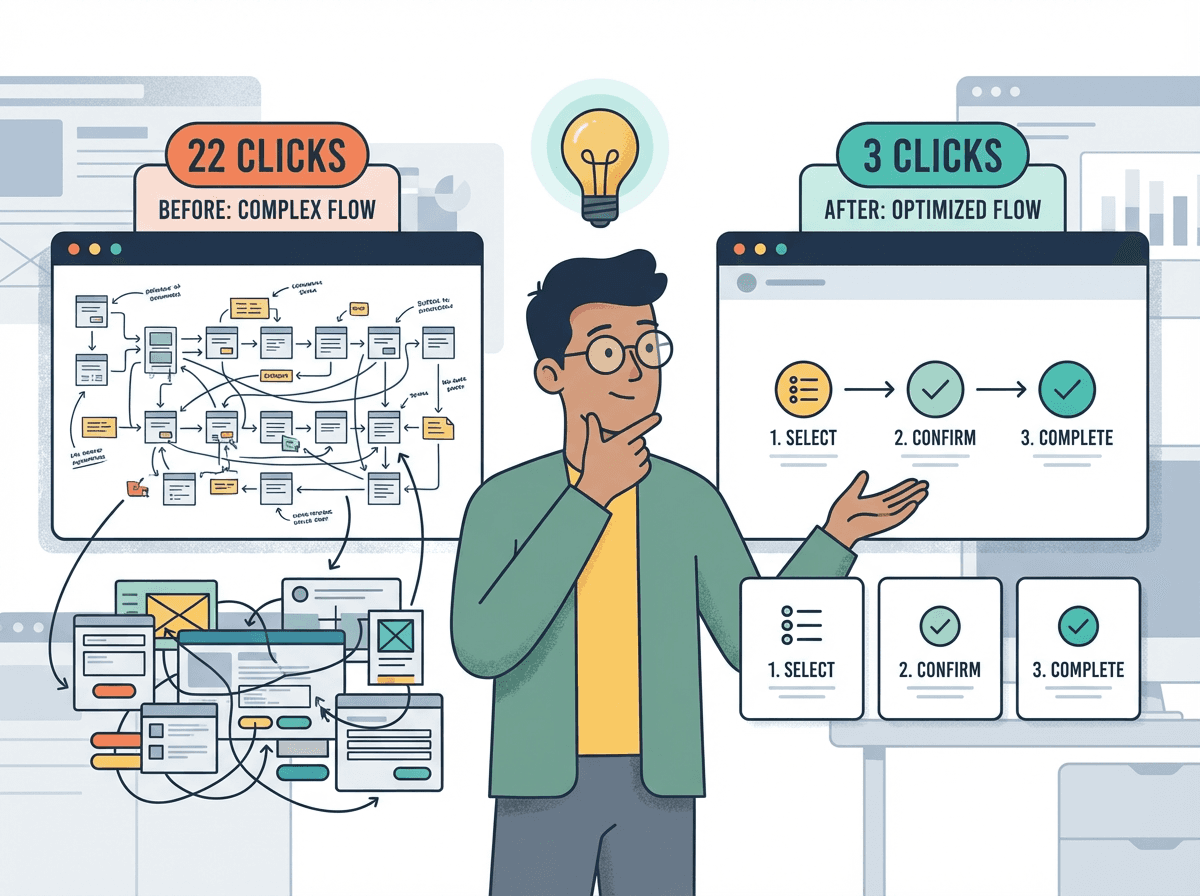
Redesigning the flow: from 22 clicks to 3
I was tasked with reducing this friction without compromising on the data we needed for profiles and event ops.
The solution was to collapse the platform registration and event registration into a single, seamless flow.
Instead of asking walkers to create an account first and then register for the event, the walkathon registration flow quietly created the #JustWalkIndia account in the background.
Shared fields (like name, contact, age, etc.) were captured once, and the system used that information to both:
Register them for the event
Create or update their platform profile
From a user’s point of view, they “just” registered for a walkathon; from the system’s point of view, we still had a clean, account-based model.This change dramatically reduced friction and helped us reach over 5,000 registrations for the Mumbai 2025 edition within about three months.
Making expo day and bib distribution manageable
Walk events have two critical days: Expo Day (bib collection) and Walk Day (the event itself).
I was responsible for designing the tool and flow used by on-ground volunteers during Expo Day to verify walkers and hand out the correct bibs.
The solution centered on a simple web tool that let volunteers identify a walker via one of three data point.
Their permanent bib number
Their registered phone number
A QR code sent to them beforehand
The volunteer could quickly search, verify details, and mark the bib as collected.Once a bib was handed over, an automatic email confirmation was triggered, giving walkers confidence that their registration and bib assignment were complete.
#Walkipedia: A Walking-only Encyclopedia
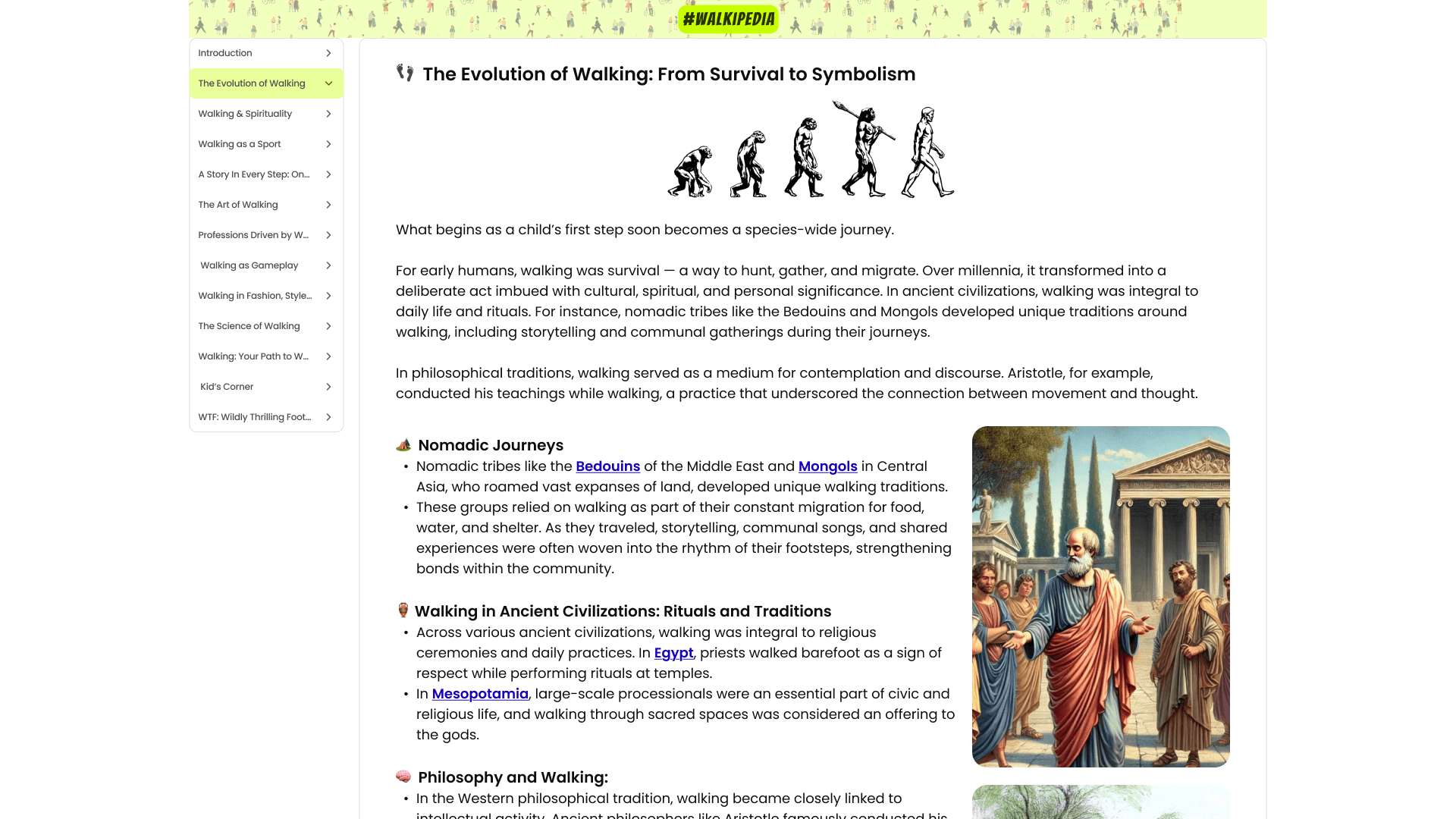
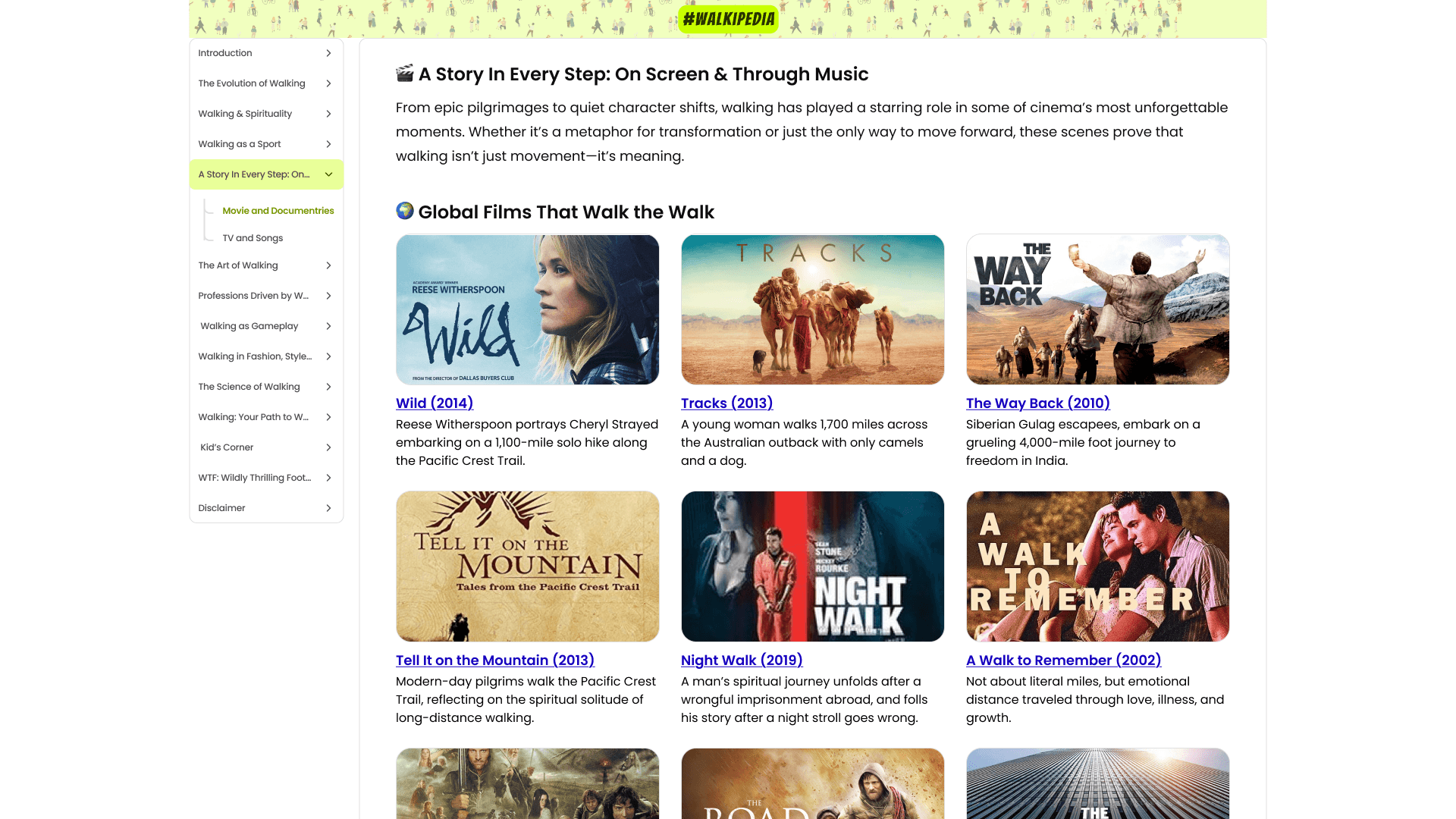
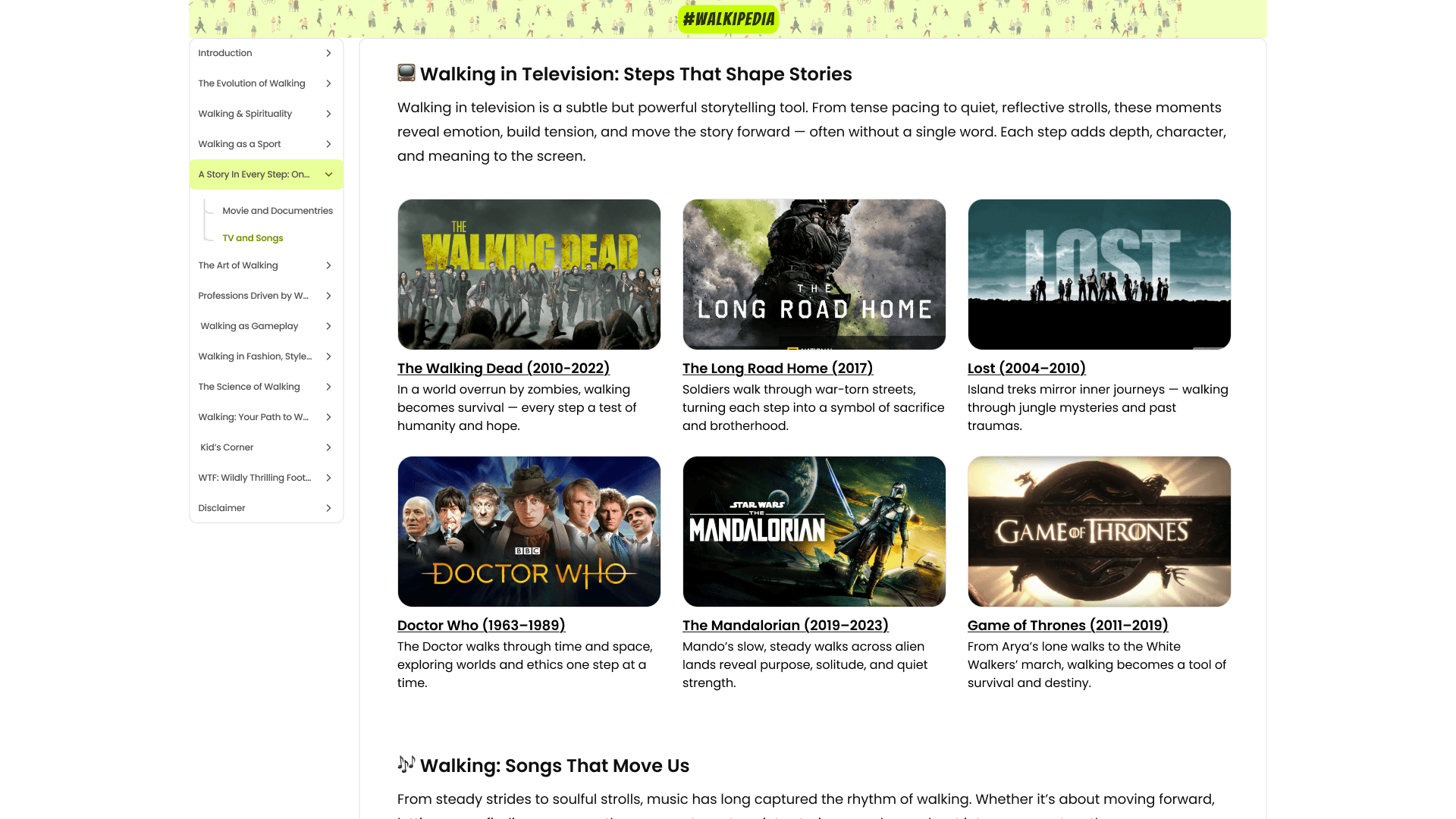
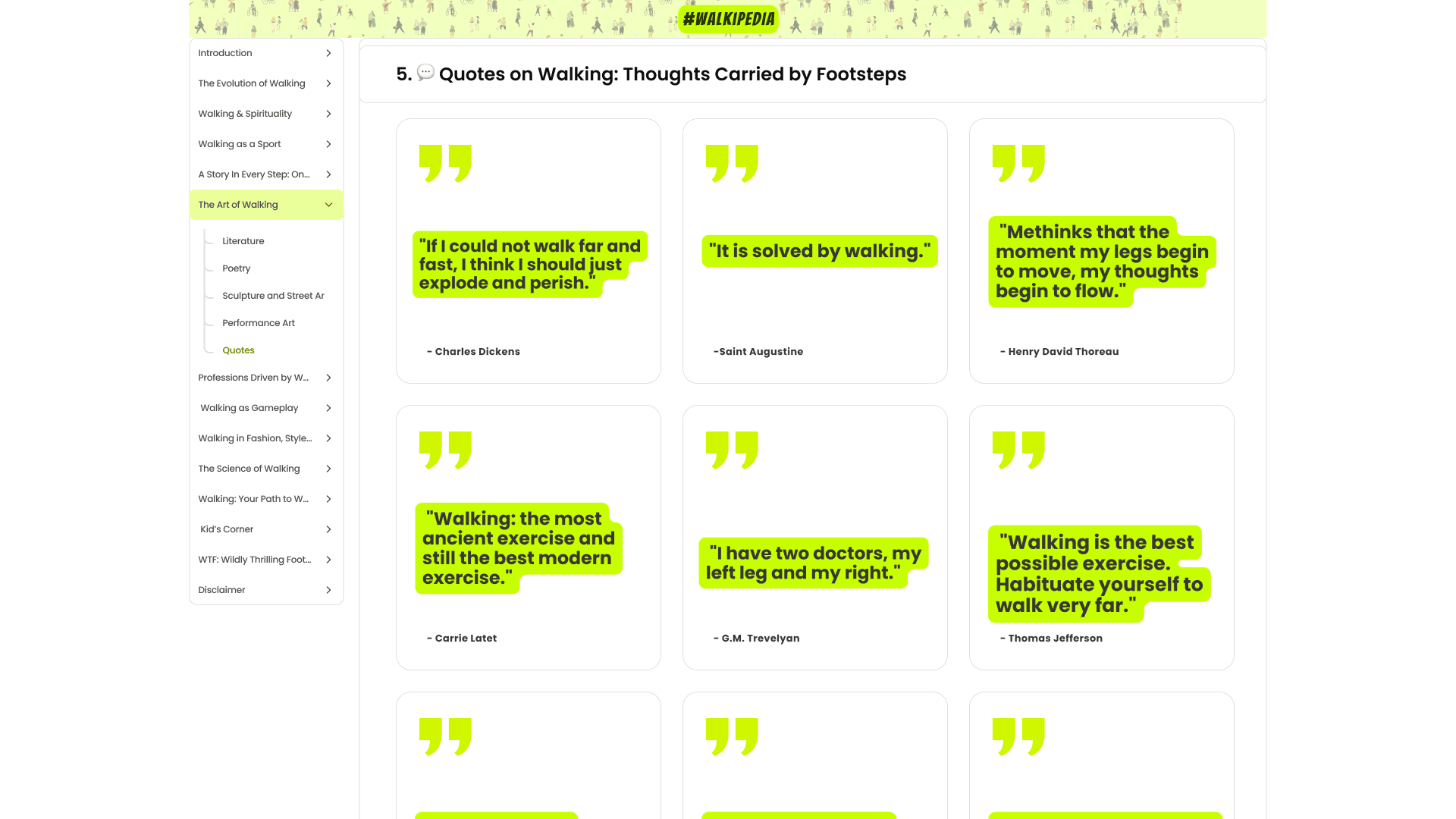
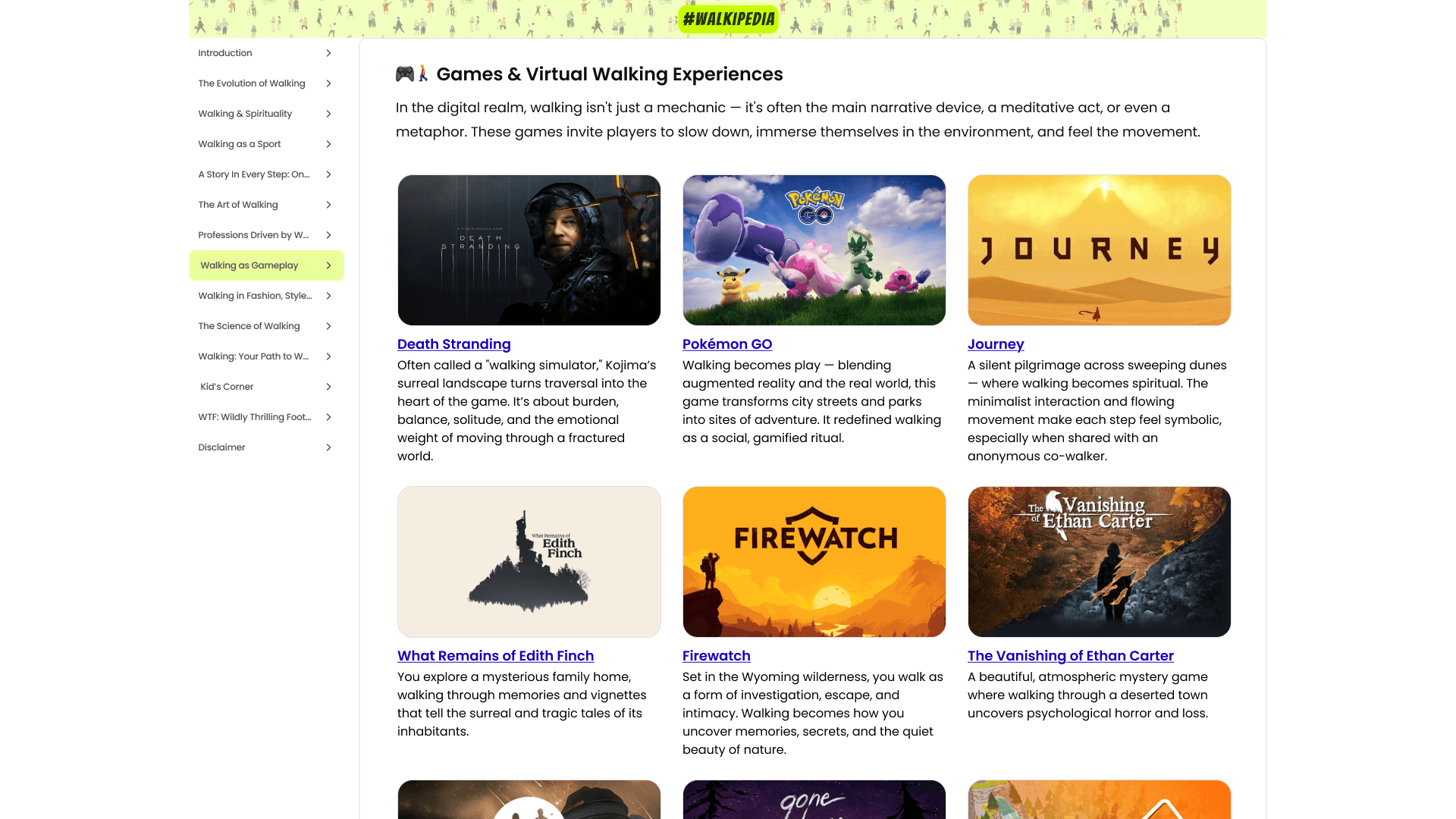
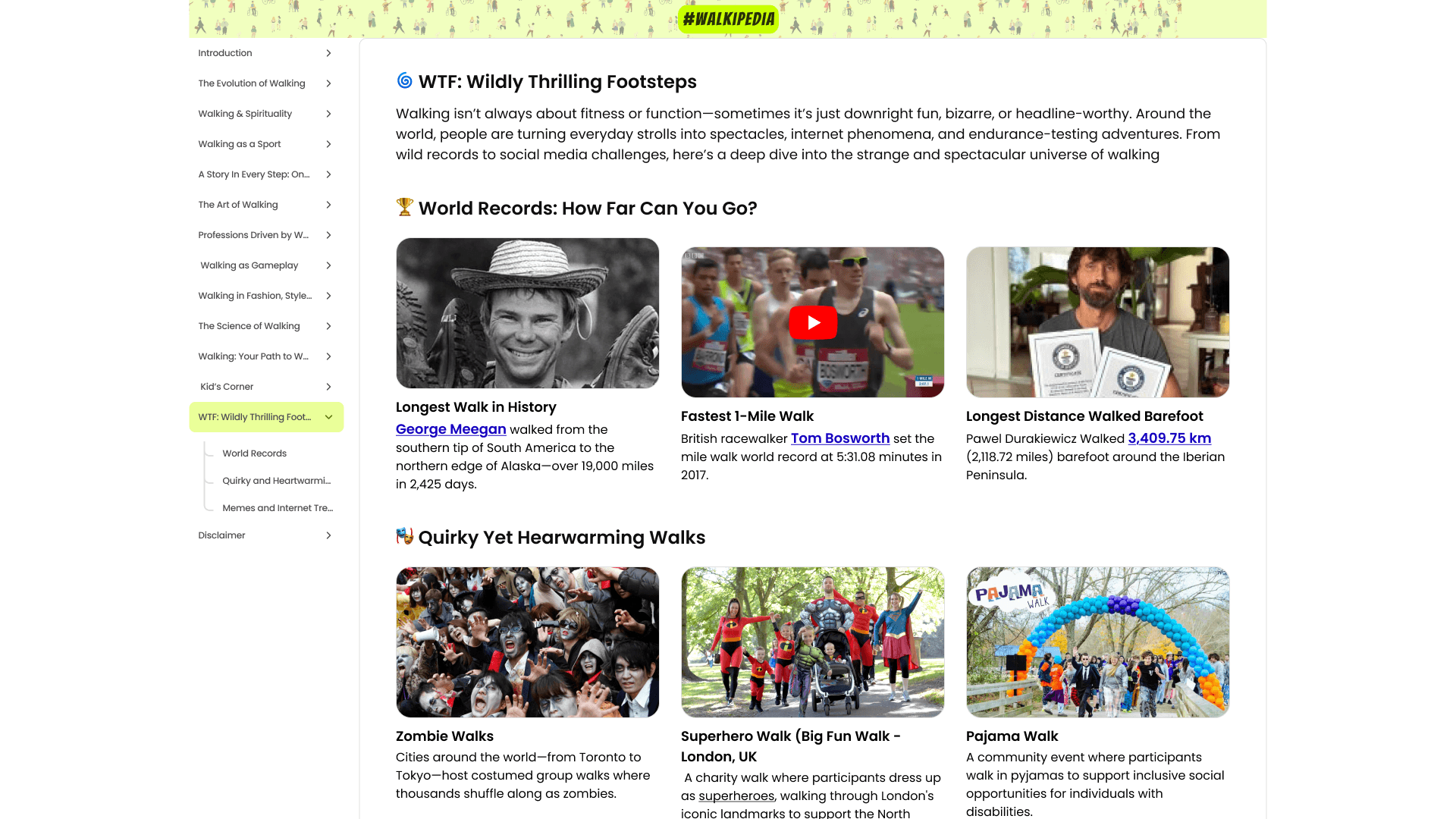
To make #JustWalkIndia feel like a living culture, not just a one-day event, we created Walkipedia – a walking-only encyclopedia that curates history, rituals, health science, and fun trivia related to walking in India and beyond.
It gave walkers a place to explore the deeper meaning of walking between events, while also strengthening the website’s long‑term SEO footprint and organic discovery.
My friend Rhea led the editorial vision and wrote the Walkipedia content, and my job was to turn that into a cohesive product experience – designing the information architecture, page layouts, and visual system, and then handing detailed specs to engineering to bring it live on the site.
The people behind #JustWalkIndia
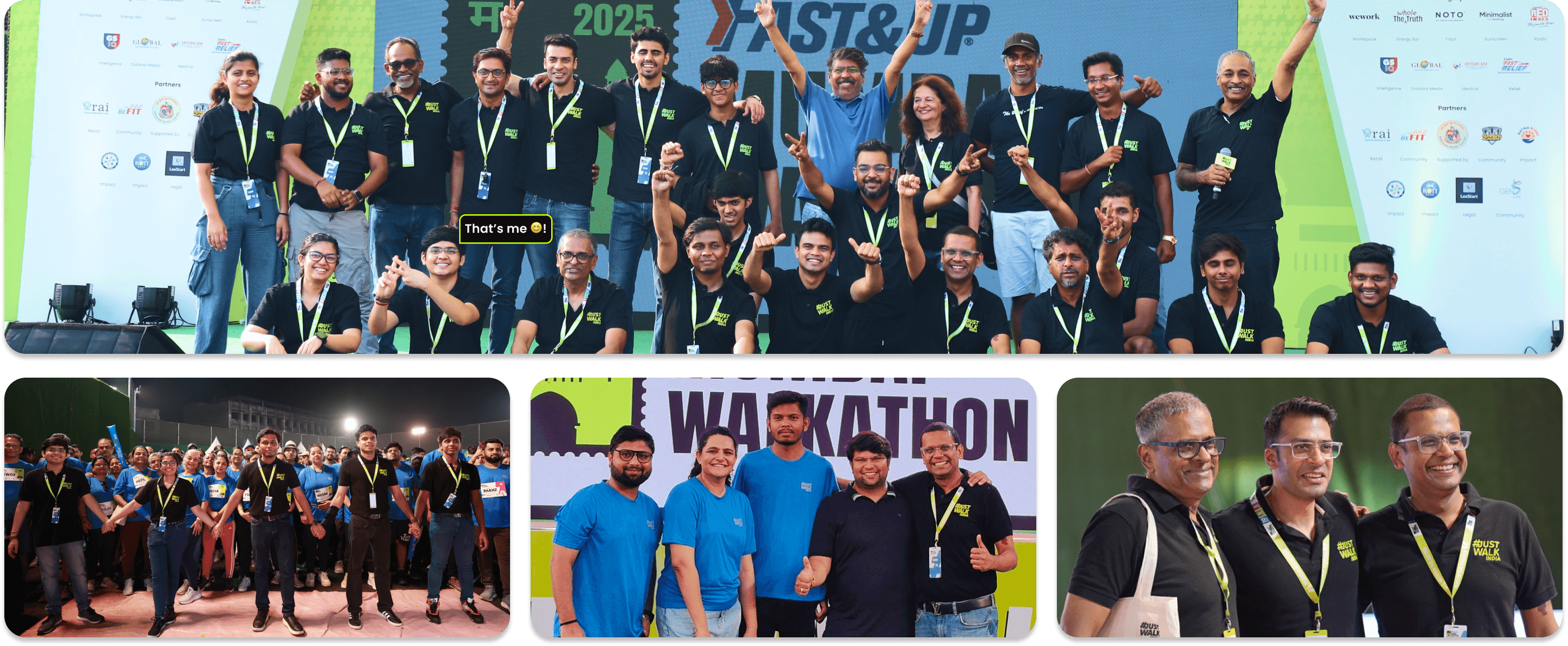
None of this would have been possible without the small, scrappy team that dreamt up #JustWalkIndia, walked every test walkathon, and obsessed over every tiny detail to make 5,000+ walkers feel celebrated.
This collage is a nod to the folks who poured their hearts into turning a simple idea about walking into a real, living movement.
Designing impact beyond the product surface
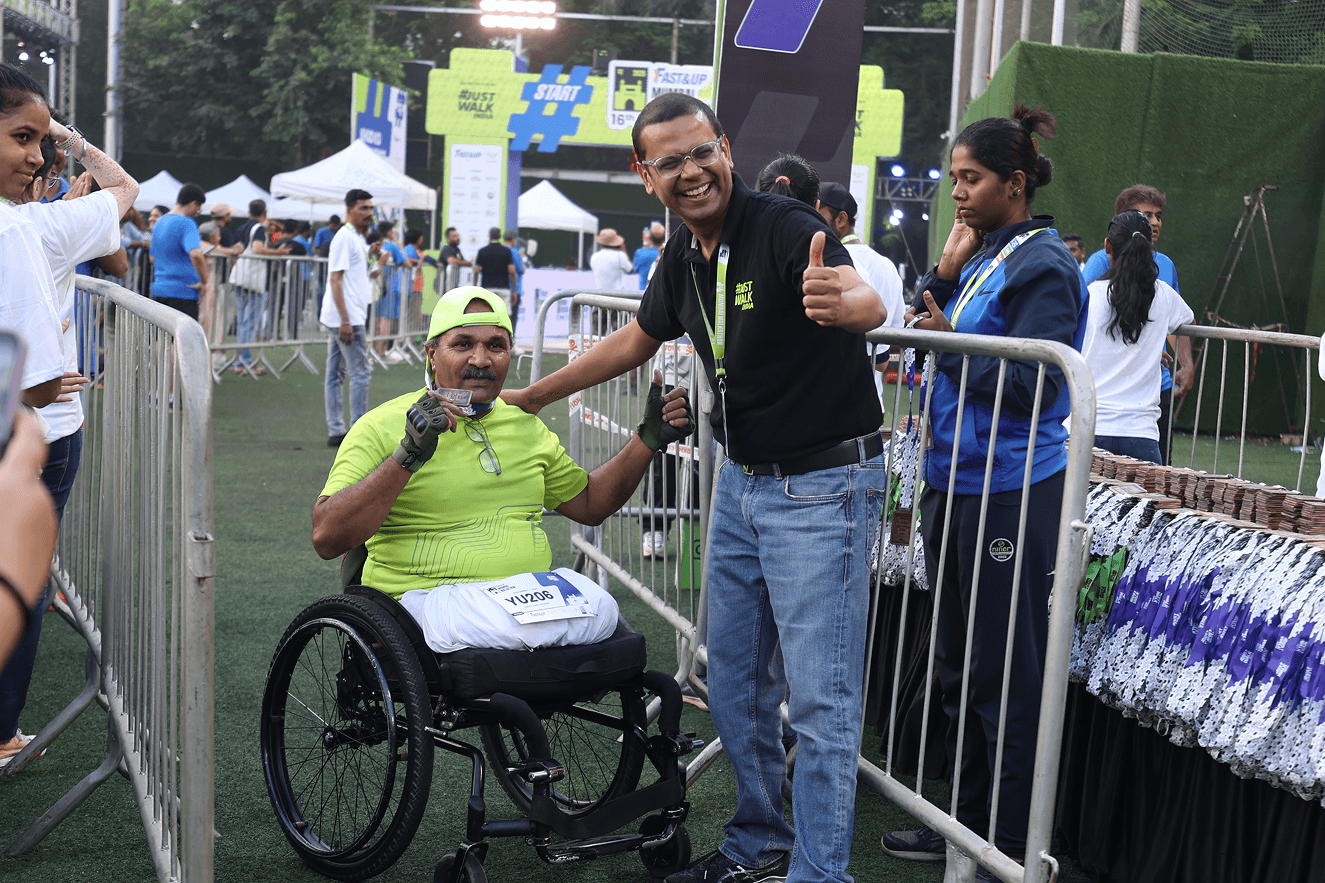
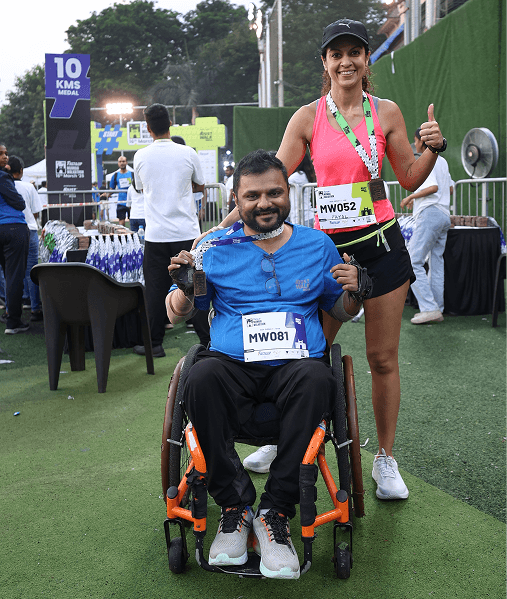
#JustWalkIndia also had a strong social dimension. For every 200 registrations, we partnered with charitable organizations to fund prosthetic legs for people who had lost theirs, highlighting how something as everyday as walking is an immense privilege for many.
Exploring future product levers
Post-launch, I started exploring ways to deepen engagement and open up new value for walkers:
Special / vanity bibs
Allowing walkers to purchase meaningful bib combinations (e.g., VINAY for someone named Vinay or specific number patterns), while ensuring offensive or sensitive combinations were filtered out.
I designed an AI-based filtering layer that tagged generated bibs as safe, unsafe, or blacklisted before assignment.
Bib home delivery
Designing a flow where walkers could opt for paid home delivery of bibs at registration, removing the need to attend Expo Day in person.
This required rethinking logistics states, cut-off times, and communication flows around shipping and delivery.
These directions showed how #JustWalkIndia could evolve from “one-off event” to a richer, ongoing relationship with walkers.